Why Excavator Transport Requires Planning
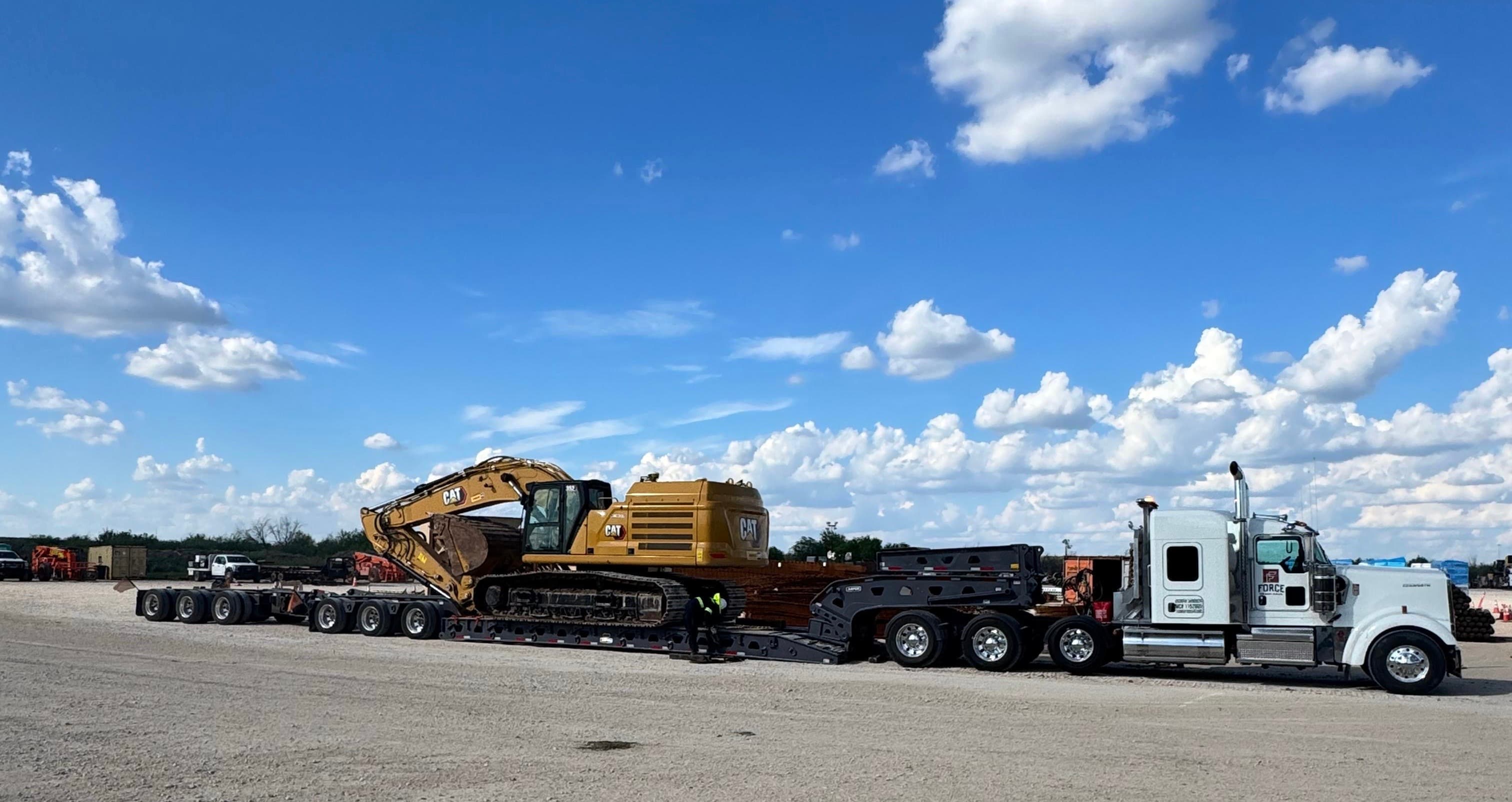
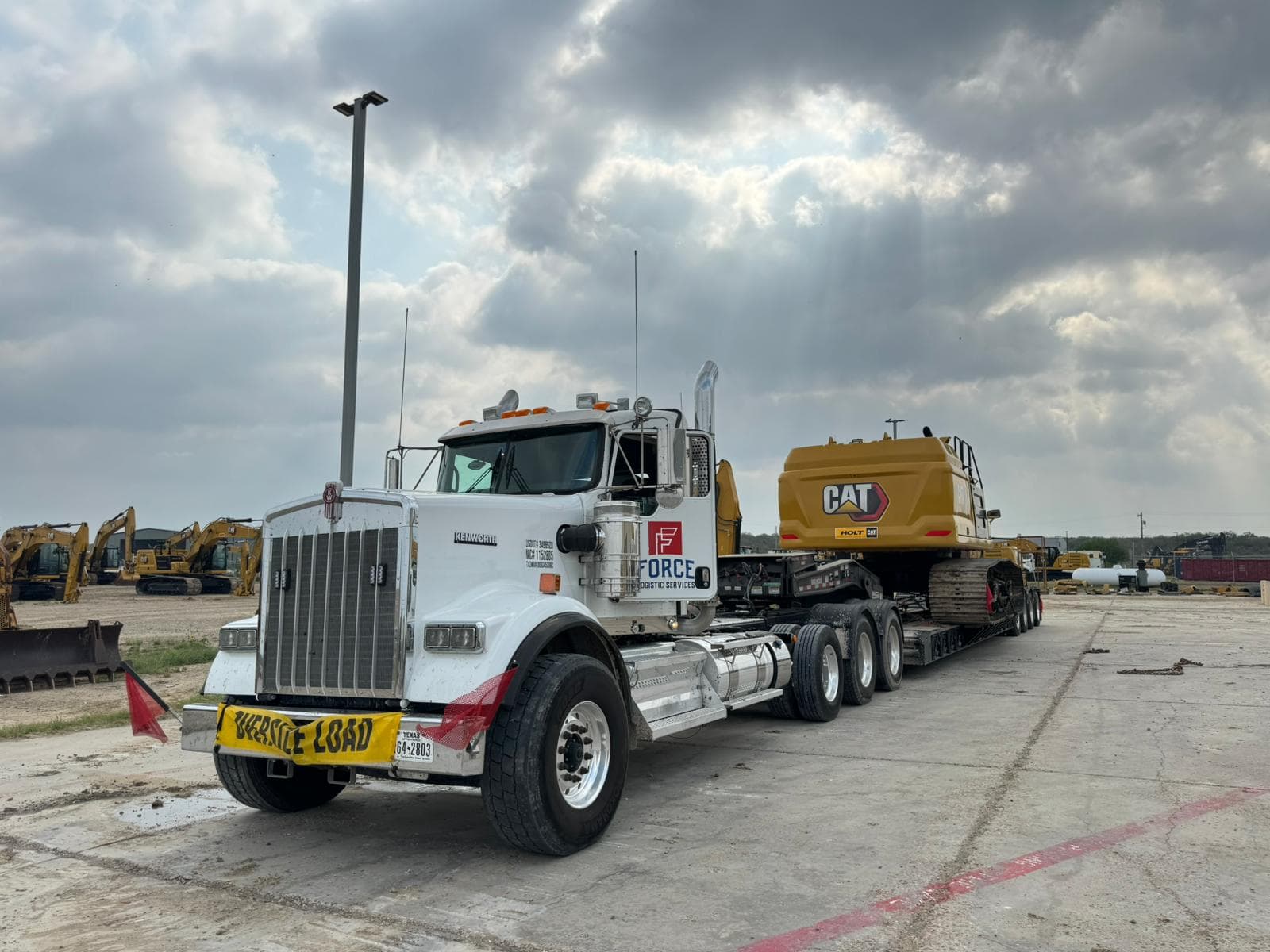
Excavators are among the most frequently transported pieces of heavy equipment — and among the most commonly damaged during transport. A CAT 336 weighs 82,000 lbs and stands over 10 feet tall with the cab. Improper securement, wrong trailer selection, or missing permits turn a routine move into a costly incident.
Force has transported over 3,000 loads since 2020, including excavators from compact units to large mass excavators. Here's the process we follow on every move.
Step 1: Measure and Document
Before anything moves, record these measurements:
- •Transport weight — Operating weight minus fuel (excavators ship with minimal fuel)
- •Transport height — Boom lowered, bucket curled, cab at lowest position
- •Transport width — Track width, or retracted track width if adjustable
- •Transport length — Boom over rear, counterweight to track edge
These numbers determine trailer type, permit requirements, and route restrictions.
Step 2: Choose the Right Trailer
Most mid-size to large excavators require a lowboy trailer:
- •Mini excavators (under 20,000 lbs) — Step deck or lowboy, no permit usually needed
- •Mid-size (20,000-60,000 lbs) — Standard lowboy, may need OW permit
- •Large (60,000-100,000 lbs) — Heavy-haul lowboy, OW/OS permits required
- •Mining class (100,000+ lbs) — Multi-axle lowboy, superheavy permits, escort vehicles
Step 3: Preparation Checklist
Before loading, complete these steps:
- •Retract tracks to minimum width (if adjustable)
- •Lower boom fully and curl bucket tight against the arm
- •Rotate cab to face rearward (reduces overall height on most models)
- •Engage swing lock to prevent cab rotation during transport
- •Disconnect any quick-attach implements and transport separately
- •Drain fuel to 1/4 tank to reduce weight
- •Photograph the machine from all four sides for condition documentation
Step 4: Loading and Securement
Loading: Drive the excavator onto the lowboy via detachable gooseneck ramps. Operator must be qualified — loading is where a lot of transport damage happens.
Securement requirements per FMCSA: - Minimum 4 tiedowns for equipment under 10,000 lbs - One additional tiedown for every additional 10,000 lbs - A 60,000 lb excavator requires minimum 8 tiedowns - Chain grade 70 or higher, rated for the load - Tiedowns on all four corners plus mid-points
Securement points: Use the machine's designated tie-down points — usually welded D-rings on the track frames. Never chain to hydraulic cylinders, bucket teeth, or the boom.
Step 5: Permits and Route Planning
For a typical mid-size excavator (CAT 330-349 class): - Width: Usually legal (under 8'6" with retracted tracks) but verify - Height: 10'6"-11'2" on a lowboy — legal under 14'0" - Weight: 70,000-85,000 lbs operating weight — OW permit required in most cases
Route planning must account for bridge weight ratings, overhead clearances, and construction zones. GPS routing for commercial vehicles misses weight-restricted county roads — experienced carriers know the routes.
Common Mistakes
- •. Not retracting tracks — Adds 6-12 inches of width, potentially triggering OS permit
- •. Boom not fully lowered — Extra height means over-height on bridges
- •. Swing lock not engaged — Cab rotates during transport, shifting center of gravity
- •. Chaining to wrong points — Damages hydraulic lines or structural components
- •. Skipping the walk-around — Pre-existing damage becomes a disputed claim
Insurance Requirements
Verify your carrier has: - Minimum $1,000,000 auto liability - Minimum $250,000 cargo insurance (higher for expensive machines) - Active USDOT and MC numbers
Force carries cargo and auto liability coverage on every load. DOT 3496920, MC 1152805.
Let Force Handle It
From trailer dispatch to permit filing to final delivery, Force manages the entire process. Request a quote with the machine model, pickup location, and destination — we'll have pricing back to you fast.