Why Trailer Selection Matters
The trailer you choose determines your legal load height, maximum payload, loading method, and permit requirements. Picking the wrong one means either paying for more trailer than you need or — worse — showing up with a trailer that can't legally carry your equipment.
Trailer Comparison
| Feature | Lowboy | Step Deck | Flatbed |
|---|---|---|---|
| Deck Height | 18-24 inches | 36-38 inches (lower deck) | 60 inches |
| Max Payload | 40,000-80,000+ lbs | 40,000-48,000 lbs | 42,000-48,000 lbs |
| Max Legal Height | 14'0" from ground | 12'6"-13'0" from ground | 11'6"-12'0" from ground |
| Loading Method | Drive-on ramps or crane | Drive-on ramps or crane | Crane or forklift only |
| Best For | Tall, heavy equipment | Medium-height equipment | Palletized cargo, steel, lumber |
| Permit Likelihood | High (usually OW) | Moderate | Low |
When to Use a Lowboy
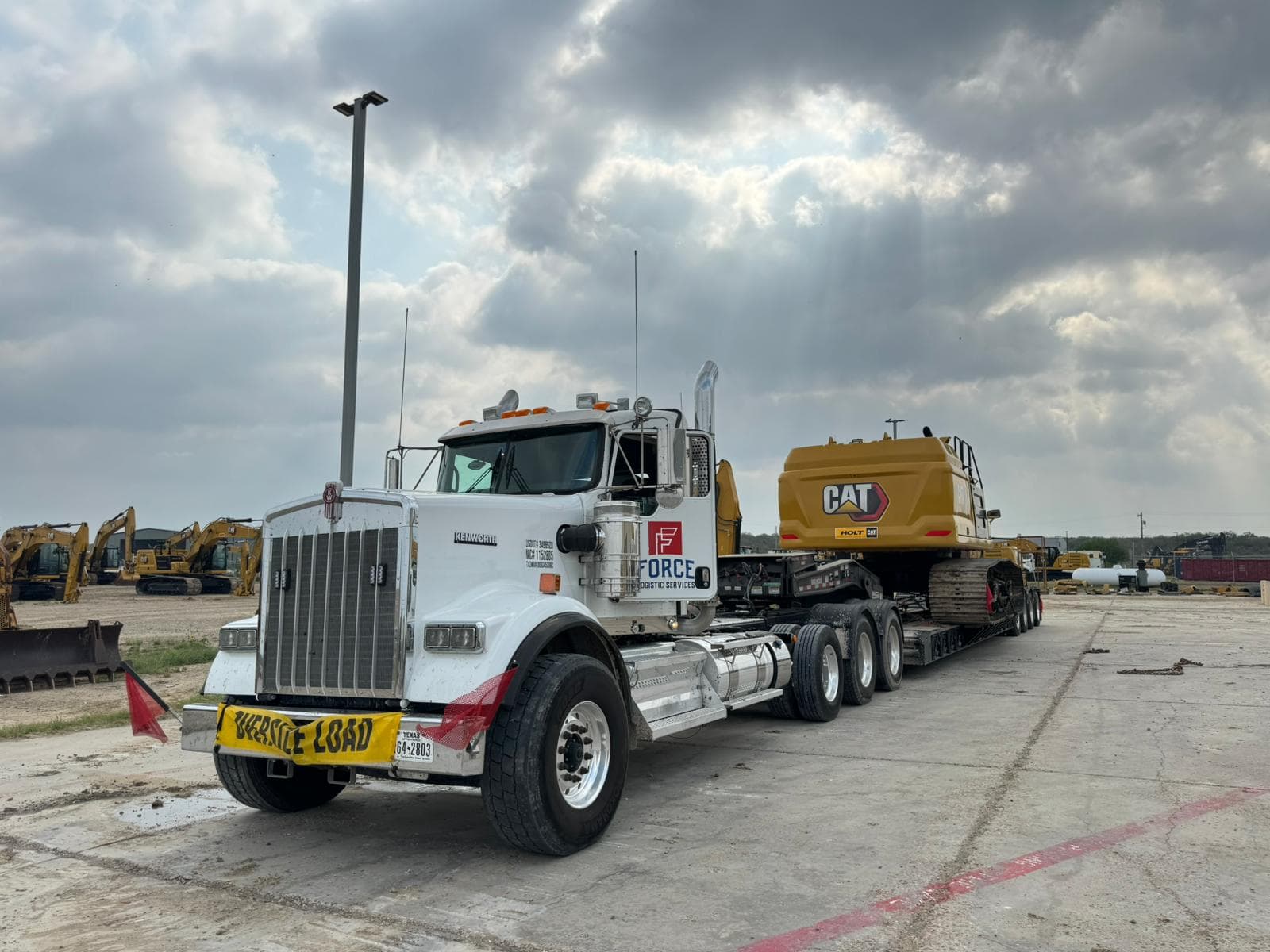
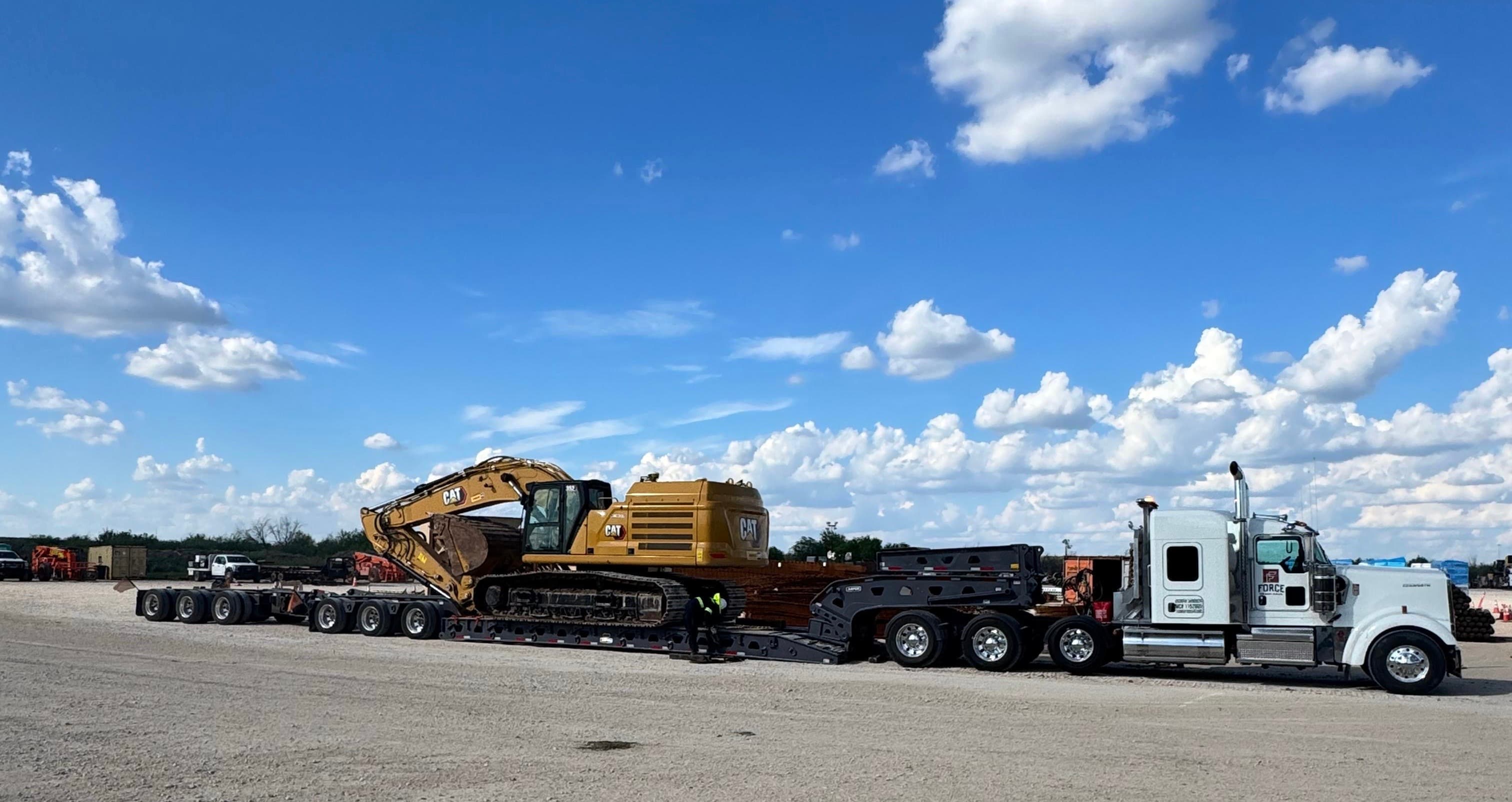
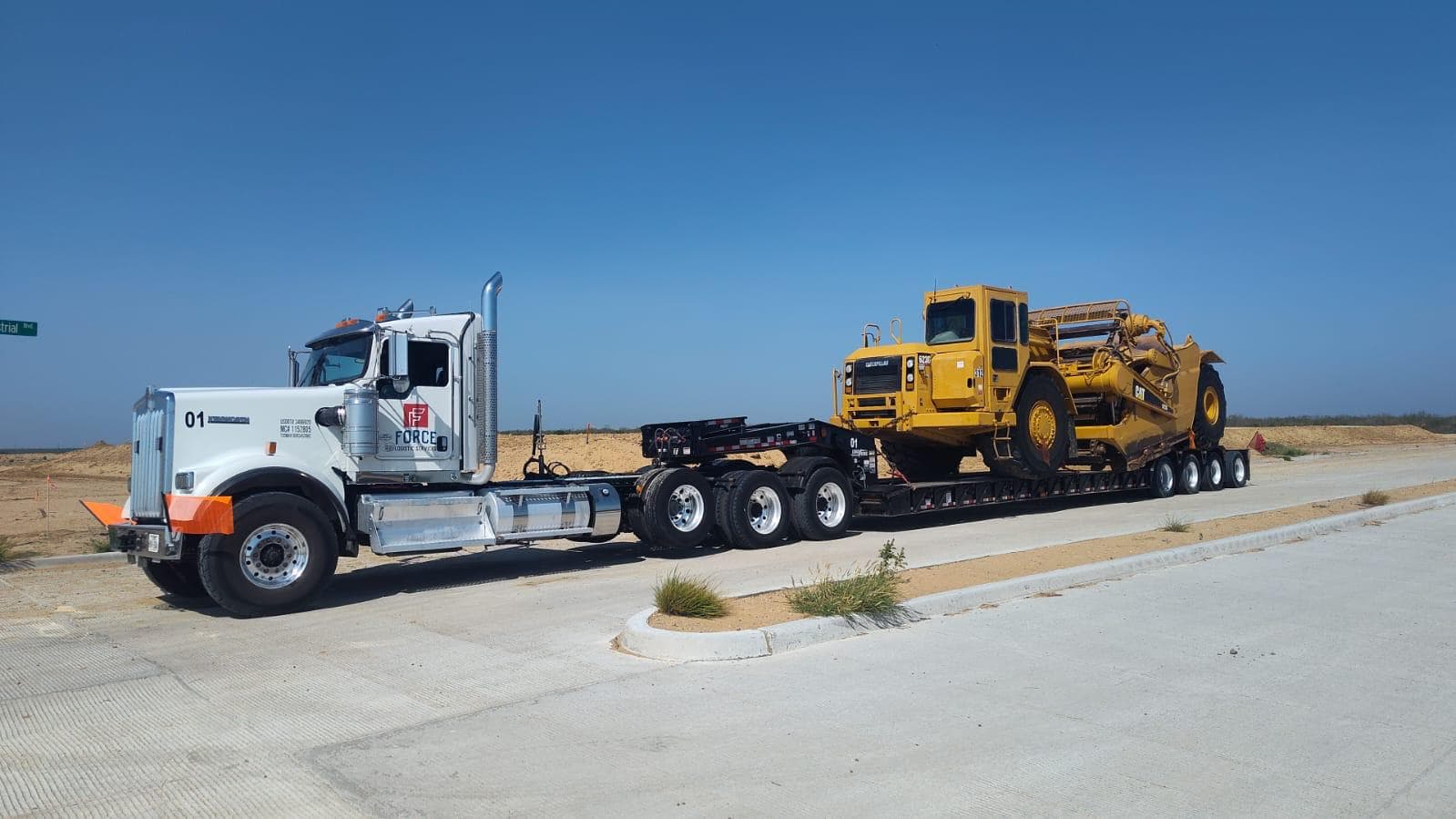
Lowboys sit 18-24 inches off the ground, giving you the most vertical clearance under the 14'0" Texas height limit. Use a lowboy when:
- •Equipment exceeds 10' tall — Excavators, large dozers, cranes, and mining equipment that would be over-height on a step deck
- •Load weight exceeds 48,000 lbs — Lowboys are built for heavy payloads and available in multi-axle configurations up to 200,000+ lbs
- •Equipment is self-loading — Most tracked machines can drive onto a lowboy via detachable gooseneck ramps
Common lowboy loads: CAT 349 excavators, D8/D9 dozers, Liebherr cranes, crushers, screeners, and transformers.
When to Use a Step Deck
Step decks have a raised front section and a lower rear section, typically 36-38 inches off the ground. Use a step deck when:
- •Equipment is under 10' tall — Skid steers, compact excavators, small rollers, and generators
- •Load weight is under 48,000 lbs — Step decks max out around 48,000 lbs legal
- •You need the cost advantage — Step decks are less expensive to operate than lowboys, so the transport rate is lower
Common step deck loads: Bobcats, mini excavators, light plants, scissor lifts, and air compressors.
When to Use a Flatbed
Standard flatbeds ride at 60 inches and are the most common and least expensive option. Use a flatbed when:
- •Cargo is under 8'6" tall — Steel beams, pipe, lumber, palletized materials
- •Load weight is under 48,000 lbs — Standard legal weight
- •No drive-on loading — Equipment must be lifted on by crane or forklift
Flatbeds are not typically used for heavy equipment transport because the high deck eats into your available height.
Pros and Cons Summary
Lowboy Pros: Maximum height clearance, highest payload capacity, self-loading capability Lowboy Cons: Higher transport cost, requires detachable gooseneck for drive-on, limited availability for specialized configurations
Step Deck Pros: Lower cost than lowboy, good height clearance for mid-size equipment, widely available Step Deck Cons: Lower payload limit, not suitable for tall or very heavy equipment
Flatbed Pros: Lowest cost, most available, simplest to load flat cargo Flatbed Cons: Worst height clearance, requires crane/forklift loading, not suitable for most heavy equipment
Force Has the Right Trailer
Force operates lowboys, an RGN and a step deck across Texas. When you request a quote, we recommend the right trailer for your specific load — optimizing for legality, safety, and cost. No upselling to a bigger trailer when a step deck will do the job.
Tell us what you're moving and we'll match the trailer. Quote turnaround: fast.